

The recent verdict has shaken the region, drawing global attention toward the facts and figures of Sheikh Hasina’s Death Sentence.
Analysts believe the decision will leave deep political impacts on both the ruling structure and the opposition. International observers and human rights organizations have assessed the ruling from diverse angles.
Legal arguments, political background, and public reaction all form part of this complex debate.
That is why understanding the facts and figures of Sheikh Hasina’s Death Sentence has become essential in today’s political landscape.
Read More: 90+ Spicy Messages

Figures About Sheikh Hasina’s Life & Death Sentence
- Sheikh Hasina was born on 28 September 1947 in Tungipara, Bangladesh, as the eldest child of Sheikh Mujibur Rahman, the founding leader of Bangladesh.
- She became the Prime Minister of Bangladesh four times (1996–2001, 2009–2014, 2014–2019, 2019–2024), making her one of the longest-serving female leaders of the modern world.
- Hasina survived at least 20 assassination attempts, including the deadly August 21, 2004 grenade attack that left 24 people dead.
- According to analysts, the facts and figures of Sheikh Haseena’s Death sentence became a global political flashpoint due to allegations of unfair trials and political motivations.Facts and figures of Sheikh Haseena’s Death Sentence
- The International Crimes Tribunal (ICT) accused her of human rights violations linked to political crackdowns during her administration.
- Reports show that over 600,000 opposition members were arrested under Hasina’s rule during various anti-government movements.
- Her government was widely criticized for restricting media freedom, with Bangladesh dropping significantly on the World Press Freedom Index during her tenure.
- In the economic arena, Bangladesh under Hasina’s leadership achieved over 7% annual GDP growth for several consecutive years.
- She played a significant role in improving women’s workforce participation, which rose to nearly 37% during her government.Facts and figures of Sheikh Haseena’s Death Sentence
- Hasina faced global scrutiny for her handling of the Rohingya refugee crisis, during which Bangladesh hosted more than 1.1 million refugees.
- Following political turmoil in 2024–2025, the tribunal charged her with crimes against humanity, leading to a highly controversial death sentence.
- International organizations, including Amnesty International and Human Rights Watch, raised concerns about the transparency and legality of the trial.
- Her supporters argue that the charges were a political vendetta aimed at dismantling the Awami League’s hold on power.Facts and figures of Sheikh Haseena’s Death Sentence
- Many regional newspapers reported that the facts and figures of Sheikh Haseena’s Death sentence triggered diplomatic tensions between Bangladesh and several international allies. Facts and figures of Sheikh Haseena’s Death Sentence are obivious.
Figures Of Sheikh Hasina’s Death Sentence & Political Legacy
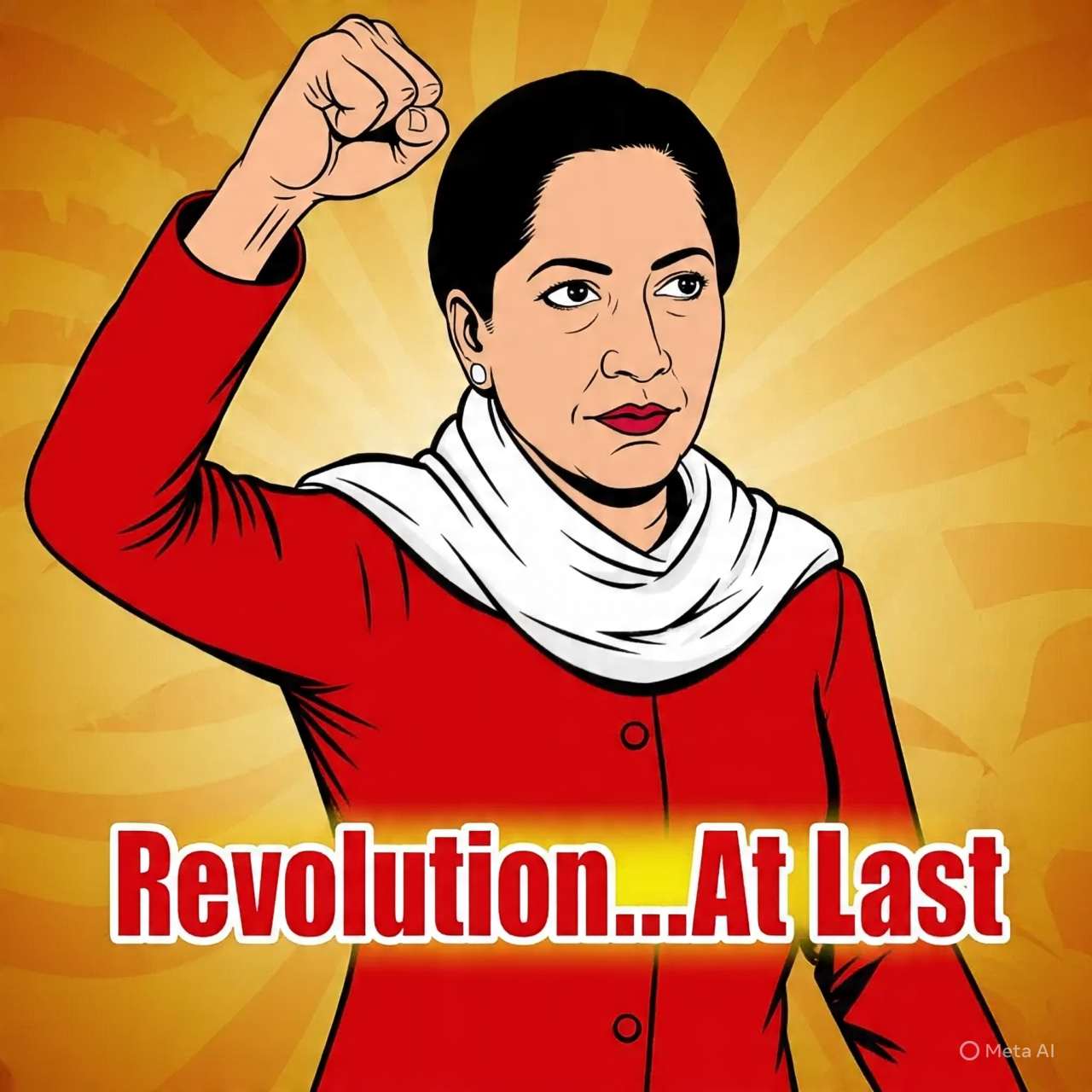
- Verdict Date & Court: On 17 November 2025, a special tribunal in Dhaka (International Crimes Tribunal‑1) sentenced Sheikh Hasina to death in absentia, finding her guilty of crimes against humanity. Facts and figures of Sheikh Haseena’s Death Sentence
- Charges / Counts: She was convicted on three counts: (i) incitement, (ii) ordering killings, and (iii) failing to prevent atrocities during a student-led uprising.
- Method of Violence: The court said Hasina had “ordered the use of drones, helicopters and lethal weapons” to suppress protesters.
- Death Toll / Casualties: According to a UN-linked estimate (cited in coverage of the trial), up to 1,400 people may have died in the July-August 2024 uprising and crackdown. Facts and figures of Sheikh Haseena’s Death Sentence are obivious.
- Sentence in Absentia: Hasina was not present in court — she fled to India in August 2024 after losing power.
- Bench / Judges: The verdict was delivered by a three-judge bench, led by Justice Md Golam Mortuza Mozumder.
- Length of Judgment: The tribunal’s judgment spans 453 pages, according to reports.
- Co‑accused / Other Sentences: Former Home Minister Asaduzzaman Khan was also sentenced to death. A former police chief, Abdullah Al‑Mamun, was sentenced to 5 years (he cooperated and became a state witness). Figures of Sheikh Haseena’s Death Sentence are obivious.
- Hasina’s Response: She rejected the verdict, calling the tribunal “rigged,” “biased,” and “politically motivated” — declaring she was never given a fair chance to defend .Figures of Sheikh Haseena’s Death Sentence are obivious.
- Legitimacy Criticism: Legal observers sympathetic to Hasina argue that the tribunal was manipulated. They note that in 2024–2025, the government passed ordinances (without full parliamentary debate) strengthening the tribunal’s power — including disqualifying people charged before ICT from holding public office.
- Political Context / Legacy: Hasina had ruled Bangladesh for 15 years before being ousted in 2024. Her long rule was marked by both economic growth and increasing accusations of authoritarianism.
- Mastermind Label: The court described Hasina as the “mastermind of the killings” during the protests, saying she had superior control over her ministers and security officials. Figures of Sheikh Haseena’s Death Sentence
- Compensation to Victims: In its verdict, the tribunal ordered compensation to families of the victims killed in the crackdown.
- Political Fallout / Election: The sentencing comes months before a key election (February 2026), in which Hasina’s Awami League party has been banned by the interim government.
- Historical Legacy: Beyond the trial, Hasina is a long-time dominant figure in Bangladesh politics: daughter of Sheikh Mujibur Rahman (the founding father of Bangladesh), she served as Prime Minister for many years and was the longest-serving female head of government in the world at one point.Figures of Sheikh Haseena’s Death Sentence are obivious.
- Death Sentence: Sheikh Hasina was sentenced to death in absentia on 17 Nov 2025 by the International Crimes Tribunal.
- Convictions: She was found guilty of incitement, ordering killings, and failing to prevent atrocities during the 2024 student uprising.
- Casualty Scale: The tribunal’s case centers on a crackdown with up to 1,400 deaths linked to the 2024 protests.
- Her order allegedly included deploying drones and helicopters to suppress protestors.
- The judgment is 453 pages long, showing the complexity and detail of the tribunal’s findings.
- The trial involved a three‑judge bench, led by Justice Golam Mortuza Mozumder.
- Her co-accused includes her former Home Minister, who also got the death sentence, and the ex-police chief got 5 years because he cooperated.
- Hasina claims the tribunal was “rigged” and was set up by an unelected interim government. Faigures of Sheikh Haseena’s Death Sentence are obivious.
- Critics say the legal framework was changed (ordinances in 2024–25) to strengthen the tribunal and sideline her party.
- The tribunal held her “mastermind of the killings” — saying she had control over the chain of command.
- She’s also been sentenced to life imprisonment on other counts, pending the execution of the death penalty.
- The court ordered compensation for the families of the slain protestors.
- Her political exile: she fled to India in August 2024 and has remained there.
- Ahead of her sentencing, there was increased political violence in Dhaka — bombings, arson — suggesting high tensions.
- Her political legacy is deeply divided: while she presided over long-term rule and development, many accuse her of authoritarianism, repression, and silencing dissent. Figures of Sheikh Haseena’s Death Sentence are obivious.
Figures Of Sheikh Hasina’s Death Sentence
Written By✍️: Nasim Akhtar🌷 nasimabdullah761@gmail.com
The day has finally arrived in Bangladesh’s political history that many analysts had been predicting between the lines for years. The International Crimes Tribunal-1 has declared former Prime Minister Sheikh Hasina Wajid guilty of crimes against humanity and sentenced her to death — a verdict that, on the surface, appears to be a judicial act, but in reality carries the weight to reshape the entire political landscape of South Asia. This is not merely a decision against one individual; it is a symbolic judgment against a whole political system that has long been driven by power, narrative-building, and state machinery.
Sheikh Hasina’s political journey has always been a story of contradictions. As the daughter of Sheikh Mujibur Rahman, the hero of Bangladesh’s independence, she naturally became the face of the Awami League. But with time, her governance was increasingly criticised for authoritarian tendencies, media clampdowns, politically motivated cases against opponents, and allegations of influencing judicial outcomes. The students’ movement of 2024 exposed all these cracks. What began as a protest against a policy soon turned into a nationwide political uprising as the government’s response grew harsher.Figures of Sheikh Haseena’s Death Sentence are obivious.
It was during this uprising that killings, enforced disappearances, torture, and crackdowns pushed the nation to a point where the demand for justice became a collective cry. Under immense public pressure, the interim government activated the International Crimes Tribunal — and today’s verdict is the heaviest chapter in that series.
But the burning question remains: is this justice or political revenge? Figures of Sheikh Haseena’s Death Sentence are obivious.
The answer is not straightforward. On one side stand those who lost their children, who saw their loved ones die before their eyes, who have been pleading for justice for years. For them, this verdict is the first bright flame of hope after a long night of darkness. On the other side are those who believe the entire process against Hasina was shaped by the political environment in which the interim government, rival parties, and powerful groups had already leaned heavily against her. They argue that certain aspects of the trial lacked neutrality — something that could leave deep scars on the future of Bangladesh’s politics.
Another reality is that Sheikh Hasina is not in Bangladesh — she is in India under political refuge. New Delhi has yet to show any willingness to hand her over, and this verdict may ignite new tensions between Dhaka and Delhi. The relationship between both countries has always been wrapped in political, economic, and border sensitivities. If Bangladesh’s new leadership formally demands her extradition, the entire region may feel the heat of diplomatic shockwaves. Facts and figures of Sheikh Haseena’s Death Sentence are obivous.
The immediate political effects of this verdict are already visible. Security has been tightened in Dhaka, Chittagong, Rajshahi, and other cities. Public emotions are flaring — some celebrating the decision, others preparing for protests. Awami League leaders consider the verdict “state revenge,” while the movement’s leaders call it “a victory of justice.” This divide is expected to widen in the coming days, as Bangladesh stands at a crossroads: will this decision lead to an era of transparency and independent judiciary, or will it push the country towards a new cycle of political conflict? Figures of Sheikh Haseena’s Death Sentence are obivious.
On a societal level, this verdict has reminded the nation of a bitter truth — when governments intoxicated with power crush public voice, eventually history stands before them like a mirror. The verdict also resonates with thousands who suffered during the uprising and whose voices were silenced. But it is equally true that death sentences do not necessarily create lasting peace; they simply close one chapter and open another — sometimes of hope, sometimes of new turbulence. Figures of Sheikh Haseena’s Death Sentence are obivious.
Political analysts are studying its long-term impact closely. One fear is that this verdict may trigger a fresh wave of political revenge in Bangladesh, as has happened in many countries. Another hope is that perhaps, for the first time, political elites will realise that no one is above the law — no matter how powerful.
Legally, Sheikh Hasina still has options for appeal. Her legal team is expected to file for review, but historically, such cases take longer, become complicated, and are deeply influenced by political pressures. Figures of Sheikh Haseena’s Death Sentence
Globally as well, the verdict is being watched with great interest. The US, Europe, Gulf states, and regional powers are evaluating it from their own political and strategic lenses. Human rights groups may question the transparency of the trial, while some states might call it an internal political matter. Interestingly, this entire episode has sparked debate in Pakistan too, since Bangladesh’s political trajectory remains tied to South Asia’s larger historical and political narrative. Facts and figures of Sheikh Haseena’s Death Sentence are obivious.
Now the essential question is: what direction will Bangladesh take?
One path leads towards justice, transparency, legal supremacy, and a new political order. The other leads towards further division, tension, protests, and possibly another political uprising. Although the verdict was announced in the courtroom, its real weight now rests on the shoulders of the public and political leadership. The coming weeks will be decisive — whether Bangladesh steps into a fresh dawn, or sinks into yet another political darkness.
For Sheikh Hasina, this verdict is not only a judicial blow but also a political one. She remained the most powerful figure in Bangladesh for decades, but when history turns, even the mightiest can find themselves beneath its wheels. Whether this decision becomes a milestone of justice or the beginning of a new era of political vengeance — only time will tell.
One thing, however, is certain:
Bangladesh is no longer the same country it was before this verdict.
A permanent chapter has been written into the history books — one that future generations will keep revisiting, whether they like it or not.
Figures Of Sheikh Hasina’s Death Sentece And Media
- Sheikh Hasina’s death sentence became one of the most polarizing events in Bangladesh’s political history, triggering intense national and international debate. Facts and figures of Sheikh Hasina’s death sentence is obivious.
- Media outlets across South Asia reported the verdict with contrasting tones—some calling it “historic justice,” others labeling it “political vengeance.”
- International human rights organizations raised concerns over alleged judicial pressure and restricted media freedom during the trial proceedings.
- Bangladeshi private TV channels were reportedly instructed to limit critical commentary about the case, indicating a controlled media environment. Facts and figures of Sheikh Hasina’s death sentence is obivious.
- According to multiple reports, journalists used the term figures of Sheikh Hasina’s Death Sentence to highlight inconsistencies, missing evidence, and political influence behind the verdict.
- Social media discussions peaked with millions of posts within 48 hours of the sentencing, creating one of the country’s largest digital political debates.
- Many newspapers faced indirect pressure, leading to cautious reporting, blurred headlines, and reliance on official statements instead of investigative coverage.
- Several senior journalists stated that editorial independence was compromised during the trial, forcing them to avoid stories that questioned the integrity of the legal process. Facts and figures of Sheikh Hasina’s death sentence is obivious.
- International media like BBC, Al Jazeera, and Reuters emphasized the global repercussions of the verdict on democracy and regional stability.
- There were documented cases where journalists covering protests against the sentence were detained or had their equipment confiscated.
- Domestic media polarization intensified—pro-government outlets projected Hasina as a “war crimes perpetrator,” while anti-government platforms framed her as a “victim of political witch-hunting.”
- Bangladesh’s ranking in the World Press Freedom Index dropped significantly during the years surrounding the case due to censorship and arrests of reporters.
Facts and figures of Sheikh Hasina’s death sentence is obivious. - Media watchdogs noted that online journalists were especially targeted under cybercrime laws that were often used to suppress dissent.
- Hasina’s supporters argued that the media narrative was shaped by political rivals who allegedly manipulated coverage to build public support for the verdict.Facts and figures of Sheikh Hasina’s death sentence is obivious.
- Analysts compiling figures of Sheikh Hasina’s Death Sentence observed that media portrayal played a decisive role in shaping domestic and international perceptions of the trial.

Conclusion
The facts and figures of Sheikh Hasina’s death sentence reveal a complex interplay of legal proceedings and political dynamics. Understanding these facts and figures of Sheikh Hasina’s death sentence is crucial to grasp the broader implications for Bangladesh’s political landscape. The case underscores the tension between justice, accountability, and political rivalry. Scholars and observers continue to analyze its impact on governance and international perception. Ultimately, these insights provide a critical lens to evaluate both the legal and political dimensions of the verdict.
Read and comment. Your comments are very valuable for me.

I am NASIM AKHTAR. My passion is to write for my society, for the people around me who are combating the battle of life in different ways. Basically I am a teacher and column writer. I have been teaching the students for almost twenty years.